
Buy Propecia (Finasteride) Online: Complete Medical Guide for Safety, Efficacy and Patient Results
Medically reviewed by: Dr. Jonathan Reed, MD, Consultant Dermatologist
Last updated: November 2025
Introduction
Male pattern hair loss (androgenetic alopecia) is one of the most common chronic dermatological conditions in men. It is characterised by gradual thinning of scalp hair in a typical pattern: recession at the temples, thinning at the vertex (crown), and, in many men, eventual merging of these areas. Although it is not dangerous to physical health, it can have a significant psychological impact, affecting self-esteem, body image and quality of life. Additional patient-friendly information on hair loss is available from the American Academy of Dermatology.
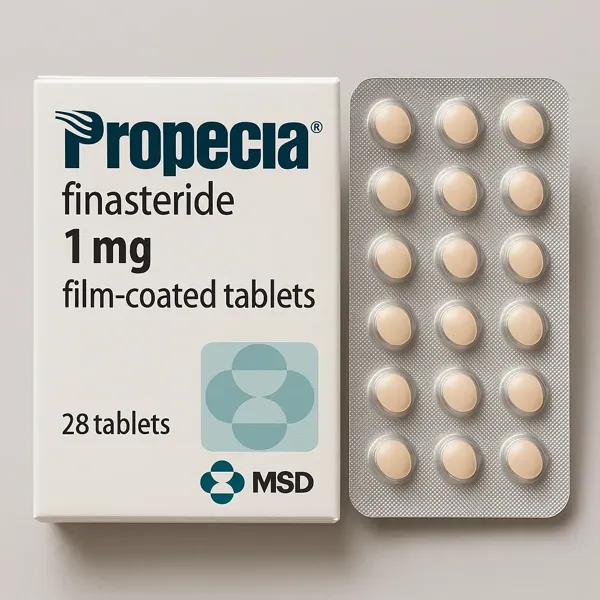
Propecia is the original brand name for oral finasteride 1 mg, a selective inhibitor of the type II 5-alpha-reductase enzyme. By reducing the conversion of testosterone to dihydrotestosterone (DHT), finasteride targets the key hormonal pathway responsible for miniaturisation of hair follicles in genetically susceptible men.
Over the past decades, more men have chosen to manage their hair loss through digital health platforms rather than traditional in-person visits. The ability to buy Propecia (finasteride) online through legitimate telemedicine services offers convenience, discretion and often cost savings. At the same time, it raises questions about safety, authenticity of medicines, clinical monitoring and appropriate use.
This comprehensive guide provides an in-depth, clinically oriented overview of finasteride for male pattern hair loss, including:
- how finasteride works
- expected benefits and limitations
- safety profile and possible side effects
- dosage and monitoring
- how to purchase Propecia (finasteride) online in a safe, responsible way
The objective is not to promote any particular brand or provider but to offer clear, evidence-based information that supports informed decision-making in consultation with a healthcare professional.
Section summary:Androgenetic alopecia is common and can significantly affect well-being. Propecia (finasteride 1 mg) is a standard, well-studied oral treatment that lowers scalp DHT. As more men choose to buy Propecia (finasteride) online, understanding how the medicine works and how to use it safely is essential.
What Is Propecia (Finasteride)?
Pharmacology Overview
Finasteride is a synthetic 4-azasteroid that selectively inhibits the type II isoenzyme of 5-alpha-reductase. This intracellular enzyme converts testosterone into dihydrotestosterone (DHT), a more potent androgen. DHT plays a central role in miniaturisation of genetically susceptible hair follicles in male pattern baldness. This mechanism is also discussed in regulatory documentation for finasteride, including the Propecia label: FDA Propecia label
Key points:
- Selectivity: Finasteride predominantly targets type II 5-alpha-reductase, present in hair follicles and the prostate.
- Effect on DHT: At the 1 mg dose used for androgenetic alopecia, finasteride can reduce serum DHT by roughly two-thirds and scalp DHT even more.
- Pharmacokinetics:
- Oral bioavailability is moderate.
- Peak plasma concentration occurs within a few hours.
- The elimination half-life is in the range of several hours, supporting once-daily dosing.
- The drug is metabolised in the liver and excreted via urine and faeces.
Importantly, finasteride does not significantly affect circulating testosterone levels in most men. Instead, it shifts the hormonal balance away from DHT, which is sufficient to influence hair follicle biology in androgenetic alopecia.
Medical Indications
Finasteride has two main indications, depending on dose:
- 1 mg finasteride (Propecia and generics): indicated for the treatment of male pattern hair loss (androgenetic alopecia) in adult men. It is not approved for use in women or children.
- 5 mg finasteride (different brands): indicated for benign prostatic hyperplasia (BPH). This higher dose is not required for hair loss treatment.
For hair loss, treatment is intended for long-term use. Beneficial effects are gradually lost if the medication is discontinued, as DHT again acts on susceptible follicles.
Propecia vs Generic Finasteride
Propecia is the original brand name for finasteride 1 mg. Today, multiple generic forms of finasteride 1 mg are available. These generics contain the same active ingredient, in the same dose, and must meet regulatory standards for bioequivalence.
Key points:
- Active ingredient: identical (finasteride 1 mg).
- Pharmaceutical form: usually film-coated tablets.
- Regulatory requirement: generics must demonstrate that they deliver a comparable amount of active drug into the bloodstream within a defined range.
- Differences:
- Excipients (inactive ingredients) may differ.
- Tablet shape, colour and imprint vary.
- Branding and packaging are different.
- Prices are often significantly lower for generics.
From a clinical perspective, most men will obtain similar efficacy and safety from generic finasteride 1 mg as from Propecia, assuming they receive a legitimate, regulated product. This is important when considering options to buy Propecia (finasteride) online, as many services dispense generics for cost reasons.
How Propecia Works on Hair Follicles
In androgenetic alopecia, susceptible hair follicles in the scalp gradually miniaturise under the influence of DHT. The hair cycle shifts:
- the anagen (growth) phase becomes shorter
- the telogen (resting) phase becomes longer
- each new hair shaft becomes thinner and shorter
Over time, this leads to visible thinning and recession.
By reducing DHT levels in the scalp, finasteride slows or reverses this miniaturisation process:
- follicles spend longer in the anagen phase
- hair shafts gradually become thicker
- more hairs are present in any given scalp area
Clinical studies have shown that finasteride can increase hair counts in targeted scalp regions and improve the overall cosmetic appearance of hair over months to years of continuous use. Key randomised trials and long-term studies are indexed in PubMed, for example: Study 1 and Study 2.
Section summary: Propecia (finasteride 1 mg) is a specific inhibitor of type II 5-alpha-reductase. It lowers scalp DHT and addresses the hormonal drive behind hair follicle miniaturisation in male pattern hair loss. Generic finasteride 1 mg is clinically comparable when sourced from regulated suppliers.
Clinical Efficacy: What Patients Should Expect
Evidence From Pivotal Trials
The efficacy of finasteride 1 mg for male pattern hair loss has been evaluated in large, randomised, placebo-controlled clinical trials. These studies followed men over several years and assessed both objective and subjective outcomes.
Typical endpoints included:
- change in hair count within a clipped scalp area
- global photographic assessment by blinded dermatologists
- patient self-assessment of hair growth, coverage and satisfaction
Results consistently showed:
- an increase in hair count in men taking finasteride compared with those taking placebo
- improvement or stabilisation of hair loss in a substantial proportion of treated men
- a tendency for placebo groups to show ongoing hair loss over time
Many participants experienced the most visible improvement within the first 1–2 years of continuous treatment, with benefits maintained as long as treatment continued.
Illustrative efficacy table
| Outcome after 1–2 years of treatment | Finasteride 1 mg (approximate trends) | Placebo (approximate trends) |
|---|---|---|
| Hair count in target area | Increased vs baseline | Decreased vs baseline |
| Global photographic assessment | Majority improved or stabilised | Majority worsened |
| Patient perception of hair growth | Often “slightly” to “moderately” better | Often “slightly worse” or no change |
| Progression of balding | Slowed or halted in many men | Continued in most men |
Long-Term Results (5–10 Years)
Longer-term observational data suggest that finasteride can help many men maintain hair density over extended periods. While individual outcomes vary, several patterns are commonly reported:
- Men who respond in the first year often maintain or further improve thickness with continued use.
- Those who stop finasteride typically lose the gained or preserved hair over several months to a year.
- Long-term adherence is a key determinant of success.
For many users, the realistic expectation is slowing or halting progression, and in a significant subset, visible regrowth or increased density.
Comparison to Other Treatments
Finasteride is often compared with other hair loss therapies:
- Topical minoxidil:Mechanism: vasodilator and hair cycle modulator, not anti-androgen. Can be used in combination with finasteride. Applied directly to the scalp (solutions, foams).
- Dutasteride:Inhibits both type I and type II 5-alpha-reductase. May produce stronger DHT suppression. Not approved for hair loss in all countries and may carry different risk considerations.
- Low-Level Laser Therapy (LLLT):Non-invasive light-based devices. Evidence suggests modest benefit for some users.
- Platelet-Rich Plasma (PRP) and other procedures:Injections or in-clinic interventions. Often more costly, with variable evidence.
In practice, many treatment plans combine finasteride with minoxidil and, where appropriate, adjunctive therapies. Finasteride remains a central systemic option for hormonally driven hair loss.
Who Responds Best?
Finasteride is not equally effective for every man. Factors associated with a better response can include:
- Earlier stage of hair loss: mild to moderate thinning rather than advanced baldness.
- Younger age: therapy started in the 20s or 30s may yield more noticeable preservation.
- Pattern of loss: vertex thinning often responds well.
- Consistency of use: daily, long-term adherence is crucial.
Some men notice clear visual improvement, while others experience primarily stabilisation. A minority may not notice a significant benefit despite appropriate use.
Text-only timeline of expected effects
- Weeks 0–4:
- No visible regrowth.
- Some men notice increased shedding; this can reflect synchronisation of hair cycles rather than treatment failure.
- Months 3–4:
- Early signs of decreased shedding for some users.
- Hair may feel slightly thicker, but changes are usually subtle.
- Months 6–9:
- More noticeable improvement in density for responders.
- Photos taken before treatment may show clearer differences than the mirror.
- Month 12:
- Treatment response is easier to evaluate.
- Many men either:
- show visible thickening and coverage, or
- have stabilised loss compared with baseline.
- Years 2–5:
- Continued maintenance of gains is possible with ongoing therapy.
- If the medication is stopped, benefits are gradually lost over several months.
Section summary: Finasteride has robust clinical evidence for slowing or reversing male pattern hair loss in many men. Efficacy is most apparent after several months and is dependent on continuous use. Combining finasteride with other modalities, such as minoxidil, can further enhance outcomes.
Safety Profile of Propecia (Finasteride)
Like all prescription medications, finasteride has potential side effects. A balanced understanding of these helps support informed decisions when considering whether to buy Propecia (finasteride) online or obtain it through a traditional clinic.
Common Side Effects
Reported side effects are typically mild to moderate in intensity and occur in a minority of users. Commonly discussed effects include:
- decreased libido
- difficulty achieving or maintaining an erection
- reduced ejaculatory volume
- breast tenderness or enlargement (gynecomastia)
- testicular discomfort
- mood changes in some individuals
These effects may begin early or appear after months of treatment. In clinical trials, many cases resolved either with continued therapy or after discontinuation. Professional guidance on prescribing and monitoring can also be found in clinical resources such as NICE (UK)
Serious but Rare Effects
Less common but more serious effects have been described, including:
- persistent sexual dysfunction after stopping the drug
- low mood, depression or anxiety
- breast changes requiring medical evaluation (for example, lumps, pain or discharge)
- rare reports of more serious mental health symptoms
The term “post-finasteride syndrome” has been used in some reports to describe ongoing symptoms after discontinuation. At present, this remains an area of discussion and ongoing research. Individuals should promptly discuss any concerning physical or psychological symptoms with a healthcare professional.
Drug and Supplement Interactions
Finasteride has relatively few clinically significant interactions with other medicines. However, attention should be paid to:
- other hormonal therapies or anti-androgens
- supplements marketed for prostate health or hair loss that may also influence hormonal pathways
- liver function, as finasteride is metabolised hepatically
Patients should provide a complete list of medications and supplements when consulting a healthcare professional, including when using telemedicine services to buy finasteride online.
Long-Term Safety
Long-term studies of finasteride in both hair loss and prostate conditions provide a substantial safety database. Important points include:
- Many men tolerate finasteride over several years without significant issues.
- Routine laboratory monitoring is not required for every user but may be considered in specific clinical contexts.
- Finasteride can reduce levels of prostate-specific antigen (PSA) in the blood; clinicians take this into account when interpreting PSA results.
Decisions about long-term treatment should be individualised, balancing the benefits (hair preservation) against any side effects or concerns.
When Finasteride Is Not Recommended
Finasteride is not appropriate in every situation. Contraindications and cautions can include:
- Women who are or may become pregnant: exposure to crushed or broken tablets can potentially affect a male fetus. Tablets should not be handled by pregnant women.
- Children and adolescents: finasteride for hair loss is not indicated in this group.
- Known hypersensitivity to finasteride or any tablet components.
- Certain liver conditions: caution is advised, and specialist advice may be needed.
- Patients with specific prostate conditions or undergoing prostate cancer screening: PSA interpretation requires care.
Table: Summary of common and less common side effects
| Category | Example side effects | Approximate frequency |
|---|---|---|
| Sexual function | Reduced libido, erectile difficulties, reduced ejaculate volume | Uncommon; minority of users |
| Breast and genital changes | Breast tenderness, enlargement, testicular discomfort | Uncommon to rare |
| Mood and psychological | Low mood, anxiety, reduced energy | Uncommon; individual variability |
| Other | Rash, itching, dizziness | Rare |
Section summary: Finasteride is generally well tolerated, but it can cause sexual, breast and mood-related side effects in a subset of users. Most are reversible, but persistent symptoms are reported by some men. A careful risk–benefit discussion with a medical professional is important before starting therapy, particularly for long-term use.
Alternatives to Propecia (finasteride)
While finasteride 1 mg is a key systemic treatment for male pattern hair loss, it is not the only evidence-based option. Some men prefer alternatives because of side-effect concerns, contraindications, or personal preference. In practice, combination therapy is common, and treatment plans are often individualised.
Topical minoxidil
Topical minoxidil (solutions or foam) is an over-the-counter treatment that can be used alone or in combination with finasteride. It does not act on hormones; instead, it influences the hair cycle and scalp microcirculation. Regular twice-daily application is usually recommended, and results are evaluated over several months.
Dutasteride
Dutasteride is another 5-alpha-reductase inhibitor that blocks both type I and type II isoenzymes and may reduce DHT more strongly than finasteride. In some countries it is used off-label for male pattern hair loss. However, its safety profile and regulatory status differ from finasteride, so careful discussion with a dermatologist or other specialist is important.
Low-level laser therapy (LLLT)
Low-level laser therapy devices (such as combs, caps, or helmets) deliver specific wavelengths of light to the scalp. Clinical data suggest modest improvements in hair density for some users. LLLT is often used as an adjunct rather than a stand-alone treatment.
Platelet-rich plasma (PRP) and other procedures
Platelet-rich plasma injections involve concentrating a patient’s own platelets and injecting them into the scalp. Some studies report improved hair density, but protocols and outcomes vary. Other procedures, such as microneedling, are sometimes combined with medical therapy to enhance results.
Hair transplant surgery
For men with stable, advanced hair loss, hair transplant surgery can redistribute follicles from donor areas to thinning regions. Surgery does not halt the underlying androgenetic process, so medical therapies such as finasteride may still be recommended to preserve non-transplanted hair.
Section summary:Alternatives and adjuncts to Propecia (finasteride) include topical minoxidil, dutasteride, low-level laser therapy, procedures such as PRP, and hair transplant surgery. A personalised treatment plan often combines several modalities based on medical history, goals, and tolerance.
Dosage, Administration and Monitoring
Standard Dosage
For male pattern hair loss, the standard dose of finasteride is:
1 mg orally once daily
Higher doses (such as 5 mg) are not required for hair loss and may increase the likelihood of side effects without adding significant benefit for scalp hair.
How to Take It Correctly
Practical considerations:
- Timing:
- Finasteride can be taken at any time of day.
- Many patients choose a consistent time (morning or evening) to support adherence.
- With or without food:
- Food does not significantly affect absorption at usual doses; it can be taken with or without meals.
- Missed dose:
- If a dose is missed, the next tablet can be taken at the usual time the following day.
- Doubling up doses is not necessary and is not recommended.
Adherence is more important than the exact hour of dosing. Creating a simple daily routine (for example, taking the tablet with brushing teeth) often improves consistency.
Laboratory Monitoring
For most healthy men using finasteride solely for hair loss:
- routine laboratory monitoring is not mandatory
- baseline and follow-up assessments can be considered on an individual basis
Situations where additional evaluation may be appropriate include:
- pre-existing liver disease
- concurrent prostate evaluation (especially PSA testing)
- significant side effects or unexpected symptoms
For online prescribing, responsible telemedicine platforms typically include questions about general health, medications, and family history to identify when in-person evaluation is needed.
How Long Before Results?
Finasteride does not produce immediate cosmetic changes. Hair growth cycles are measured in months, not days. A realistic timeline helps manage expectations.
Text-only treatment timeline (finasteride 1 mg daily)
- Month 1:
- No visible benefit.
- Possible transient increase in shedding as miniaturised hairs are replaced.
- Month 3:
- Some users notice less shedding and may feel hair is slightly fuller.
- Photographs under consistent lighting are often more informative than subjective impressions.
- Month 6:
- Many men see clearer signs of stabilisation and early thickening.
- Non-responders may be identified, but some continue to improve beyond this point.
- Month 12:
- A full year of treatment provides a solid basis for assessing efficacy.
- If there is visible improvement or clear stabilisation versus baseline photos, continuing therapy is often recommended.
- Beyond 12 months:
- Gains can be maintained with continued use.
- Stopping treatment usually leads to gradual loss of benefit over several months.
Section summary:Finasteride for hair loss is taken as a 1 mg tablet once daily. Consistency of dosing over months is critical for assessing response. Routine blood tests are not required for every user, but individual factors may warrant closer medical monitoring.
Buying Propecia (Finasteride) Online Safely
The option to buy Propecia (finasteride) online can be convenient and discreet, but it must be approached carefully. The goals are to ensure:
- genuine, regulated medication
- appropriate medical evaluation
- secure handling of personal data
- transparent pricing
How Online Telemedicine Works
Modern telemedicine platforms generally follow a structured process:
- Medical questionnaire:The patient provides information about health status, medications, allergies and hair loss history.
- Clinical review:A licensed healthcare professional reviews the information and may request additional details or scalp photographs.
- Prescription decision:If finasteride is appropriate, an electronic prescription is issued. If not, alternatives or in-person evaluation may be recommended.
- Pharmacy dispensing and delivery:A regulated pharmacy ships branded Propecia or generic finasteride, often in discreet packaging.
- Follow-up:Some services offer periodic reviews or clinician access for questions.
This structure aims to replicate core elements of a traditional consultation, adapted for remote care.
How to Verify a Safe Online Pharmacy
When you buy finasteride online, distinguishing a legitimate provider from an unregulated seller is essential. Indicators of a reputable service include:
- Requirement for a prescription: Finasteride legally requires a prescription.
- Clear prescriber credentials: Names, registration numbers, real addresses.
- Licensing and accreditation: Verified by recognised regulatory bodies.
- Secure website: HTTPS, privacy policy, transparent terms.
- Customer support: Ability to contact pharmacists or clinicians.
Avoiding Counterfeit Medications
Unregulated online sources may supply counterfeit or substandard products. Potential risks include:
- tablets without active finasteride (ineffective therapy)
- incorrect dose (too low or too high)
- contamination or unsafe excipients/li>
Warning signs:
- unusually low prices far below typical market ranges
- no requirement for a prescription or basic health information
- lack of verifiable contact details or regulatory information
To reduce risk:
- use established telemedicine providers and pharmacies
- check the packaging, batch number and expiry date on arrival
- discuss any concerns with a pharmacist or doctor before starting the product
Additional guidance on identifying legitimate online pharmacies is provided by initiatives such as NABP Safe Pharmacy.
Price Comparison: Brand vs Generic
Prices vary by country, pharmacy and provider, but certain patterns are common:
| Product type | Typical characteristics |
|---|---|
| Propecia (brand) | Higher cost; same active ingredient; premium branding |
| Generic finasteride 1 mg | Lower cost; bioequivalent; multiple manufacturers |
| Telemedicine subscription | May bundle consultation and supply; recurring billing |
| Local in-person prescription | Separate consultation + pharmacy costs |
When comparing options to buy Propecia (finasteride) online, it is useful to calculate a monthly cost and to confirm whether the service supplies the original brand or generics.
Comparison of common male pattern hair loss treatments
| Treatment | Main mechanism | Route | Evidence for efficacy | Typical use |
|---|---|---|---|---|
| Propecia (finasteride 1 mg) | Reduces DHT by inhibiting type II 5-alpha-reductase | Oral | Strong evidence from randomised controlled trials | First-line systemic treatment for male pattern hair loss in many men |
| Generic finasteride 1 mg | Same as Propecia (finasteride 1 mg) | Oral | Clinically equivalent when sourced from regulated manufacturers | Cost-effective alternative; often used via online telemedicine services |
| Topical minoxidil | Hair cycle modulation; non-hormonal | Topical (solution or foam) | Moderate to strong evidence; enhances density in many users | Often combined with finasteride to maximise response |
| Dutasteride | Inhibits type I and II 5-alpha-reductase | Oral | Emerging data suggest strong efficacy, though use may be off-label | Option for selected patients under specialist guidance |
| Low-level laser therapy (LLLT) | Photobiomodulation of hair follicles | Device-based (combs, caps, helmets) | Evidence of modest benefit in some users | Adjunct therapy for men seeking non-pharmacological support |
| Hair transplant surgery | Redistribution of permanent follicles to thinning areas | Surgical | Good evidence for cosmetic improvement in appropriately selected patients | Considered when medical therapy alone is insufficient |
Best Practices When You Buy Propecia (Finasteride) Online
Practical tips:
- Choose platforms that include a genuine medical consultation with a licensed prescriber.
- Provide accurate health information; incomplete or misleading details can compromise safety.
- Confirm whether you will receive Propecia or generic finasteride and in what dose (1 mg for hair loss).
- Check shipping frequency and policies around refills, returns and cancellations.
- Store medication as instructed and keep it out of reach of children.
- Contact the provider or your own doctor if you experience side effects or have concerns.
Section summary:It is possible to buy Propecia (finasteride) online safely when using reputable telemedicine services and regulated pharmacies. Verifying credentials, avoiding suspiciously cheap sources and understanding exactly which product is being supplied are crucial steps.
Patient opinions and experiences
The following patient experiences are illustrative examples showing the range of responses men may have when using Propecia (finasteride). Individual results vary, and clinical guidance should always be sought when making treatment decisions.
“Noticeable thickening after about a year” — James, 32
I started Propecia when I first noticed thinning around the crown. The initial three months were discouraging because shedding seemed to increase. By month six the shedding reduced, and around one year the hair in the crown area looked fuller based on photos. I have not experienced significant side effects and plan to continue the medication.
“Stabilised hairline with mild early side effects” — Michael, 28
Finasteride did not regrow much hair for me, but it has noticeably slowed further recession. I had a temporary reduction in libido during the first couple of months, which resolved. Stabilising my hairline has been worth it.
“Stopped because of persistent side effects” — Daniel, 41
I used the medication for nine months and saw mild visual improvement. Unfortunately, I experienced sexual side effects that did not improve while continuing treatment. After consulting my physician, I decided to stop. The experience makes me more cautious about systemic treatments.
“Good results when combined with minoxidil” — Oliver, 35
My dermatologist recommended using finasteride along with topical minoxidil. Over two years, the combination led to thicker coverage at the crown and overall better density. I have had no significant side effects and continue regular check-ins to ensure the treatment remains appropriate.
“No major change after a year” — Ethan, 30
After one year of daily use, my hairline did not improve but also did not worsen. My dermatologist said some patients mainly maintain what they have, and this seems to be my case. I have not had notable side effects, but I am still evaluating whether to continue long term.
“Switched from Propecia to generic finasteride” — Liam, 38
I began with the branded version and later switched to a generic purchased through a telemedicine service. I noticed no difference in results or tolerability. I continue follow-up appointments annually to ensure the treatment remains suitable for me.
Frequently Asked Questions
Can I combine finasteride with minoxidil?
Yes, many treatment plans combine oral finasteride with topical minoxidil. The two medications act through different mechanisms: finasteride targets hormonal pathways, while minoxidil influences hair cycle dynamics and scalp microcirculation. Combination therapy can provide additive benefits for some men.
Does finasteride cause permanent side effects?
Most side effects reported in clinical trials resolved after stopping the medication. However, there are case reports of persistent symptoms in some individuals. Because of this, anyone considering long-term finasteride therapy should weigh potential benefits against these possibilities and discuss them with a healthcare professional.
Can I use finasteride to grow a beard?
Finasteride is not indicated for beard growth. Its mechanism reduces DHT, which in some men is important for facial hair development. For this reason, finasteride is not used to promote beard growth and, theoretically, could even diminish it in certain individuals.
Should I stop finasteride before trying to conceive?
Finasteride at the 1 mg dose leads to very low levels of the drug in semen, and routine discontinuation before conception is not always required. However, some men and clinicians choose to stop the medication as a precaution. This decision is best made in consultation with a doctor, taking into account the current evidence and personal preferences.
How long should I stay on finasteride?
Finasteride is a maintenance therapy for male pattern hair loss. As long as the medication is effective and well tolerated, many men continue treatment for years. If stopped, hair is likely to revert towards the pattern that would have occurred without treatment. Periodic review with a doctor is recommended to reassess the balance of benefit and risk.
Section summary:Frequently asked questions about finasteride often focus on combination therapy, possible long-term side effects, fertility issues and the duration of treatment. Individualised medical advice is essential for all of these topics.
Can I drink alcohol while taking finasteride?
Most people can drink alcohol in moderation while taking finasteride, as no direct interaction is known. However, heavy alcohol consumption may worsen general health, mood, and hormone balance, which can indirectly affect hair health. Men with liver conditions should discuss alcohol intake with their doctor, as finasteride is metabolised in the liver.
Does stopping finasteride cause rapid hair loss?
When finasteride is discontinued, DHT levels gradually return to baseline. Hair maintained or regrown during treatment may be lost over several months to a year. This process does not represent “rapid shedding,” but rather a return to the natural progression of androgenetic alopecia. Restarting treatment may help, but results can vary.
Can finasteride be used after a hair transplant?
Yes, finasteride is commonly recommended after hair transplant procedures to preserve non-transplanted hair and slow further thinning. While transplanted hair is resistant to DHT, native surrounding hairs are still susceptible. The exact timing of starting or resuming finasteride should be discussed with the surgeon to avoid interfering with early healing.
People also ask
Does finasteride regrow hair or just stop hair loss?
Finasteride can both slow or stop further hair loss and, in many men, lead to visible thickening or regrowth, particularly in the crown and mid-scalp areas. The degree of regrowth varies and is usually assessed over 6–12 months.
Is finasteride safe to take long term?
Long-term studies show sustained efficacy and generally good tolerability in many men. However, side effects such as sexual or mood changes can occur, and ongoing review with a healthcare professional is recommended for long-term use.
Why does finasteride sometimes cause initial shedding?
Some men experience increased shedding in the first few months of treatment as miniaturised hairs are shed and replaced in a more synchronised growth phase. This does not necessarily mean the treatment is failing, but persistent concerns should be discussed with a doctor.
Is brand Propecia better than generic finasteride?
Brand Propecia and generic finasteride 1 mg contain the same active ingredient and are required to be bioequivalent. Most men will obtain similar clinical outcomes when both are sourced from regulated pharmacies.
Is it safe to buy finasteride online?
It can be safe to buy finasteride online when using licensed telemedicine providers and properly regulated pharmacies that require a prescription and offer access to qualified clinicians. Unregulated websites that sell finasteride without medical evaluation or clear credentials should be avoided.
Conclusion
Male pattern hair loss is a chronic, progressive condition with a strong genetic and hormonal basis. Propecia (finasteride 1 mg) is one of the most established medical therapies, targeting DHT-mediated miniaturisation of scalp hair follicles. Clinical trials and long-term observations show that many men can achieve stabilisation of hair loss and, in a significant proportion, visible improvement in density when finasteride is used consistently over months and years.
At the same time, finasteride is not without potential side effects, particularly in relation to sexual function and mood. Most adverse effects are reversible, but persistent symptoms are reported by some users. A careful, well-informed discussion with a healthcare professional is therefore essential before starting treatment.
For men who prefer digital healthcare, the option to buy Propecia (finasteride) online through reputable telemedicine platforms and regulated pharmacies can be safe and convenient. The key requirements are:
- a genuine medical evaluation
- clear information about the product supplied (brand or generic)
- robust privacy and safety standards
- ongoing access to clinical support
Ultimately, the decision to start and continue finasteride should balance the psychological and cosmetic benefits of hair preservation against the potential risks, in the context of each individual’s health profile and priorities.
Scientific references
The information in this article is based on published clinical trials, regulatory documents, and expert guidelines. Examples include:
- Randomised clinical trials evaluating finasteride 1 mg for male pattern hair loss.
- Regulatory documentation for Propecia (finasteride 1 mg) from major medicines agencies.
- Guidelines and position statements on the management of androgenetic alopecia.
- Peer-reviewed reviews on long-term safety and efficacy of finasteride and related therapies.
Readers are encouraged to discuss these sources and their implications with a qualified healthcare professional when making treatment decisions.